Destination by Design: Zoning the Modern Travel Retail Experience
Summer is the defining season for travel retail. As airports move into their busiest months and terminals swell with the year’s heaviest passenger flows, the spaces between check-in and boarding become some of the most valuable retail real estate in the world.
For a few unhurried hours, travelers are relaxed, curious, and unusually open to discovery – a mindset few other retail environments can claim. The opportunity isn’t simply to fill that space with products. It’s to design spaces that turn moments of curiosity into memorable experiences. Yet the real story isn’t about summer. The season surge simply shines spotlight on a broader shift reshaping physical retail throughout the year. As consumers become increasingly selective with their time and attention, the role of the store is evolving from a place of transaction to a place of discovery.
Travel retail is a category unlike any other. It draws an audience from every corner of the world into a single space, each shopper arriving with different tastes, languages, and reasons to browse. Unlike the high street, where people usually arrive with intent, the terminal shopper is passing through – so the environment itself has to do the work of attracting, orienting and inspiring, all within limited dwell time and constant movement. That makes travel retail as much a design discipline as a commercial one. Every touchpoint, every transition and every visual cue has an opportunity to earn attention rather than demand it.
It is also a category in motion. Travelers increasingly treat the airport as a destination in its own right – a chance to discover niche brands they can’t find at home, indulge in a travel-retail exclusive, or trade up to something they’ve been promising themselves. Younger shoppers in particular are driving this shift, approaching luxury with confidence. In response, brands are moving away from spaces built purely around transaction and toward environments built around emotion, storytelling and discovery.
As digital commerce becomes increasingly efficient at helping people find what they already know they want, it also reinforces familiar behaviors – continually recommending products based on what we’ve already searched for, viewed or purchased. Physical retail has an opportunity to offer something different: unexpected discovery. It invites shoppers to explore beyond algorithms, encounter something new and engage with brands in ways digital channels cannot easily replicate.
The Power of the Zone – Designed for Discovery
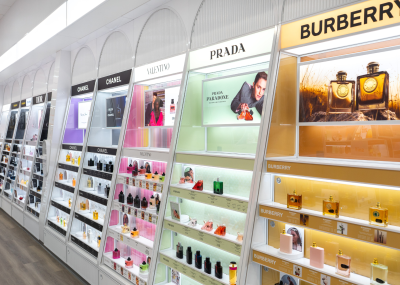
In an environment defined by movement and time pressure, how a space is organized matters as much as what it holds. This is where zoning – the art of dividing a retail floor into distinct, purposeful territories – becomes essential. Rather than presenting travelers with an undifferentiated wall of products, thoughtful zoning gives each category its own identity, rhythm and role within the wider journey. It shapes how people move, pause, explore and ultimately discover.
Done well, it achieves several things at once. It guides flow, reducing cognitive effort and leading shoppers intuitively through space and easing the sense of overwhelm a busy terminal can generate. It creates destinations, giving hero categories and premium houses room to breathe and to tell their story. It balances the familiar with the new, letting best-sellers anchor the space while niche discoveries earn their own moment. And it builds in points of pause, where a traveler can slow down to test, sample and engage.
Zoning is also what keeps a store from feeling like every other store. Sameness is one of the biggest risks in the channel – spaces that blur into one another from one airport to the next. Clear, considered zoning is the antidote, letting each brand express a distinct point of view within a coherent whole so the environment feels curated rather than assembled. For Array Marketing, this is the heart of the work: designing spaces where movement, meaning and merchandising come together, where every zone has a reason to exist and where thoughtful design creates the conditions for meaningful discovery.
Accessories: Designing for Detail
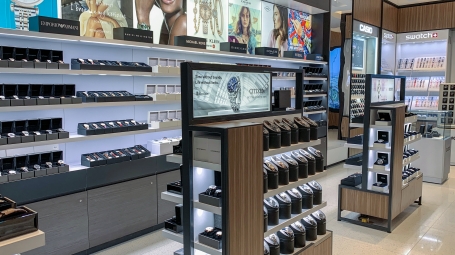
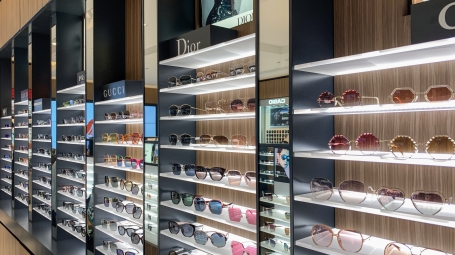
Nowhere is the value of a well-defined zone clearer than in accessories, where watches and eyewear reward close, considered attention. At San Francisco International Airport, our work with DFS shows how these categories can be lifted above the transactional. Precise lighting, considered sightlines and premium finishes let each piece stand on its own – inviting travelers to pause, examine and try on rather than pass by. For products defined by craftsmanship and detail, the environment becomes part of the product, turning a busy terminal setting into something closer to a flagship boutique than a duty-free aisle.
Beauty: A Stage for Artistry
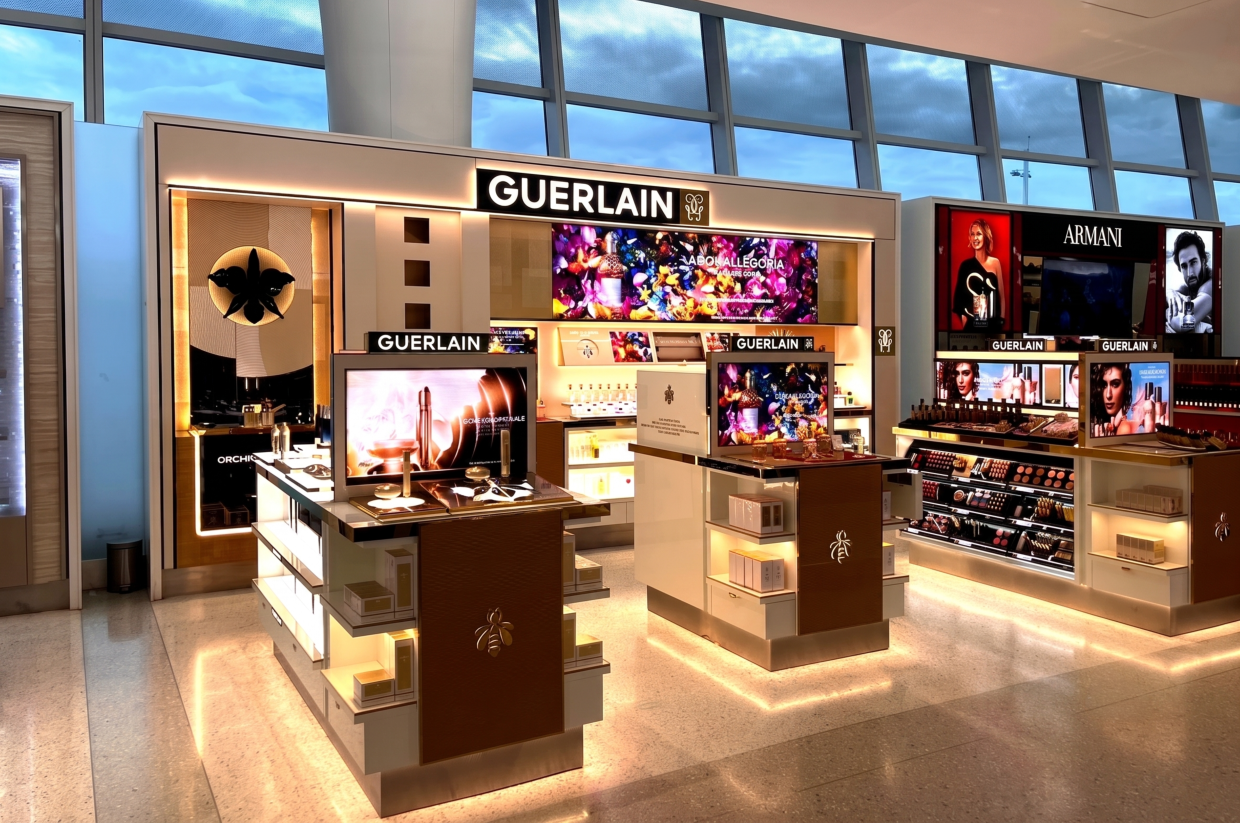
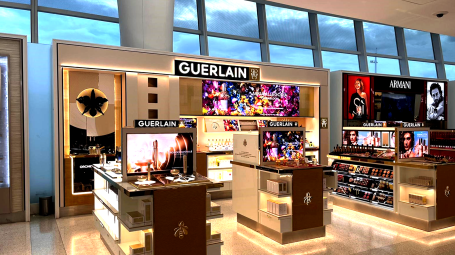
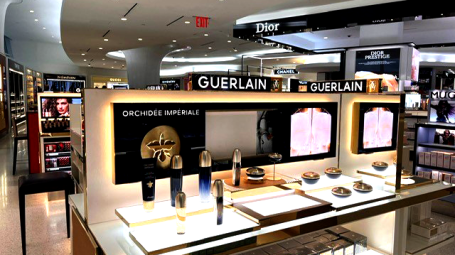
If accessories reward detail, beauty rewards immersion. It is one of travel retail’s most expressive categories, where heritage and artistry meet the shopper face to face. Our work with Guerlain at New York’s JFK Airport reflects this: one of the most storied names in French beauty, Guerlain carries a legacy of craftsmanship across skincare and makeup. A dedicated beauty zone gives that heritage room to breathe – premium finishes, considered lighting and space to test and discover – turning a passing moment into an invitation to step inside the house’s world, strengthening the connection with the brand. Here, the retail environment becomes an extension of the brand itself, transforming storytelling from something shoppers simply observe into something they actively experience.
Fragrance: The Category Leading the Way
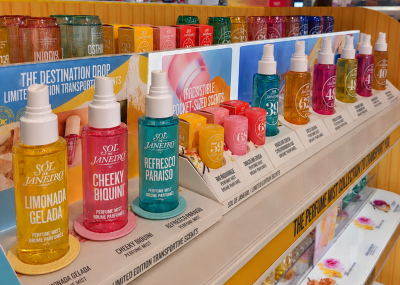
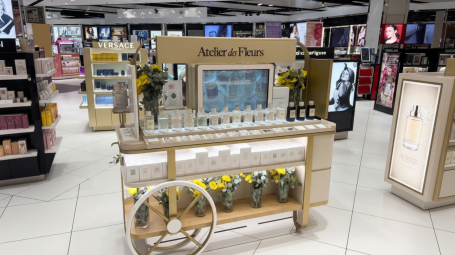
Of all the categories in travel retail, fragrance is arguably setting the pace. Scent is emotional, personal, and tied to memory, making it one of the most experience-driven categories in the retail mix. As travelers increasingly value the feeling of finding something unique over simply purchasing a product, fragrance environments are evolving into destinations for exploration. Our project for Chloé’s Atelier des Fleurs cart shows what’s possible when zoning, storytelling and craftsmanship come together. Inspired by the charm of a Parisian flower cart, the mobile display unit transforms a high-traffic footprint into an intimate discovery station.

Where the Journey Becomes the Destination
As global travel continues to rebound and the summer season underlines just how much opportunity the terminal holds, the brands that succeed will be those that treat travel retail as an experience to be designed, not simply a space to be filled. Zoning is where that experience begins – the framework that turns movement into discovery, categories into destinations, and a passing traveler into an engaged shopper.
Yet the lessons extend far beyond the terminal. As digital commerce becomes increasingly efficient at helping consumers find what they already know they want, physical retail has an opportunity to offer something distinctly human: exploration, engagement and meaningful discovery.
At Array Marketing, every retail environment begins with understanding the people who will experience it, the brands it represents and the products it brings to life. The strongest retail environments succeed when consumer behavior, brand identity and thoughtful design work together to create experiences that feel intuitive, authentic and memorable.